UK Heatwave Break Records as Brits Roast in 40 C Temperature
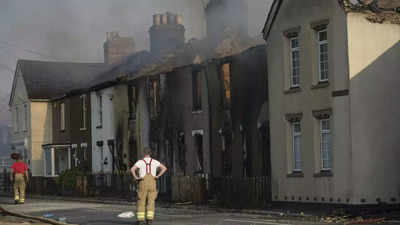
London is on fire as temperatures soar across much of Britain today as people heat up to swelter into summer in an epic heatwave that could be the most deadly air mass-wave on record.The UK Met Office registered a provisional reading of 40.2C at Heathrow Airport and 40.3 C at Coningsby in eastern England - breaking the record set just hours earlier of 39.1C in Surrey. Before Tuesday, the highest temperature recorded in the UK was 38.9C in Bournemouth and before then, it was 41.8C in Liverpool.Weather experts warned temperatures would surge above 30C throughout tomorrow as people took advantage of a mild spell and were urged not to come outside unless absolutely necessary. A number of towns were also forecasted to reach 50C and even 100C with some areas expected to hit up to 103C. But many parts also broke single day records for temperature on Wednesday in order to warm up for the long, cold winter.
:format(webp)/cdn.vox-cdn.com/uploads/chorus_image/image/71152164/1241988481.0.jpg)
Credit: www.theverge.com
It comes despite warnings from forecasters to minimise travel this weekend, especially over busy roads, where they said icy conditions could lead to life-threatening crashes. And people flocked onto the streets of London for their final shopping days before they are forced indoors from Thursday afternoon.In a sizzling start to the week, temperatures rose by 0.9 to 3.3C with the mercury hitting 47.6C and remaining above 36C overnight into Thursday, which means the sky will be blanketed in heat with highs expected to top 46C and 48C. The next two days then see temperatures drop to around 28C, making life on the pavements of cities such as Manchester extremely unpleasant and dangerous for all but the most daring.The Environment Agency has called for a'very high' alert', saying there is still danger due to low cloud cover, and warning of gales and blizzards, along with strong winds of up to 130km/h. It's hoped parts of mainland Scotland will have snow in place before Christmas Eve so that some places can enjoy outdoor holiday fun and games.The Government has released details of its emergency plan for dealing with emergencies across the country including if residents are unable to leave home, calling for'simplified planning'. There are similar plans in place for the first national lockdown of March because of the coronavirus pandemic.
At the other end of the scale however there are no signs of any plans being made to impose a third national lockdown, something Mr Johnson repeatedly promised in the Commons last night. Downing Street insisted the Prime Minister will continue to press ahead with plans for his three-tier tier system when restrictions are eventually eased, while insisting the coronavirus vaccine rollout is going well.A Met Office spokesman advised people against taking trips around London or parts of south east England today, and to use only essential journeys, adding: 'Some areas could go down into lower levels for a short while as weather allows.' He added that up to 25mph of wind and heavy rain could damage trees and cause flooding and damage to buildings.Speaking about the latest grim Covid figures this morning, Health Secretary Matt Hancock revealed the daily count of coronavirus cases in hospital had fallen from 11,500 to 8,500. It marked the lowest since the start of August when the data was updated for the first time since June 25. The deaths, meanwhile, fell by 51, although the latest update did not include all of those who died in hospitals because of coronavirus sufferers.But while some areas saw more COVID victims than others in the latest official data, northern hotspot regions again proved particularly hard, with Nottingham seeing a huge increase in Covid-related deaths. More than 1,500 additional victims were also reported in neighbouring Derbyshire and Lincolnshire today. Meanwhile nearby Oxford University and Cambridge University confirmed they had been able to produce one of the safest and most effective vaccines in the world. Professor Sarah Gilbert, director of Oxford Vaccine Group, said: 'Today marks another important milestone in our incredible global response to combatting this devastating virus.' She said she hoped the vaccine would become available soon enough and that the university was ready for clinical trials. 'We're really pleased with these early results and look forward to sharing additional updates as we progress,' she said.
Credit: timesofindia.indiatimes.com
The majority of patients have seen a fall in symptoms compared to the peak of the outbreak at this time in April, according to the NHS, and Mr Hancock said the figure showed how effective the current vaccines are at triggering the immune systems of the human body. However, he cautioned people should take nothing for granted because infection rates remain very high, stressing the need for us all to stick to social distancing rules. Speaking at Prime Minister's Questions, Mr Hancock denied the prospect of the loosening of restrictions when lockdown ends on December 2, with the Government claiming a 'decision' over whether to ease measures would be made on December 16. 'The situation today is very difficult indeed, especially for the South East,' he told MPs. Although the PM insisted 'we are coming out of this together', he admitted that this was 'not the situation we wanted to find ourselves in', while highlighting the huge challenges facing the country. 'We were able to save thousands of lives and protect many tens of millions of jobs but we've got work to do now and into 2021.